Best Portable Gaming Handhelds Compared in 2026
- Primary Signal: Best Portable Gaming Handhelds Compared in 2026
- Overview: Steam Deck, ROG Ally, Switch 2, and the rest: which portable gaming handheld should you buy in 2026? A clear comparison of power, battery, library, and price....
- Verification: Analyzed and compiled by GameVault 668 editorial monitoring desk.
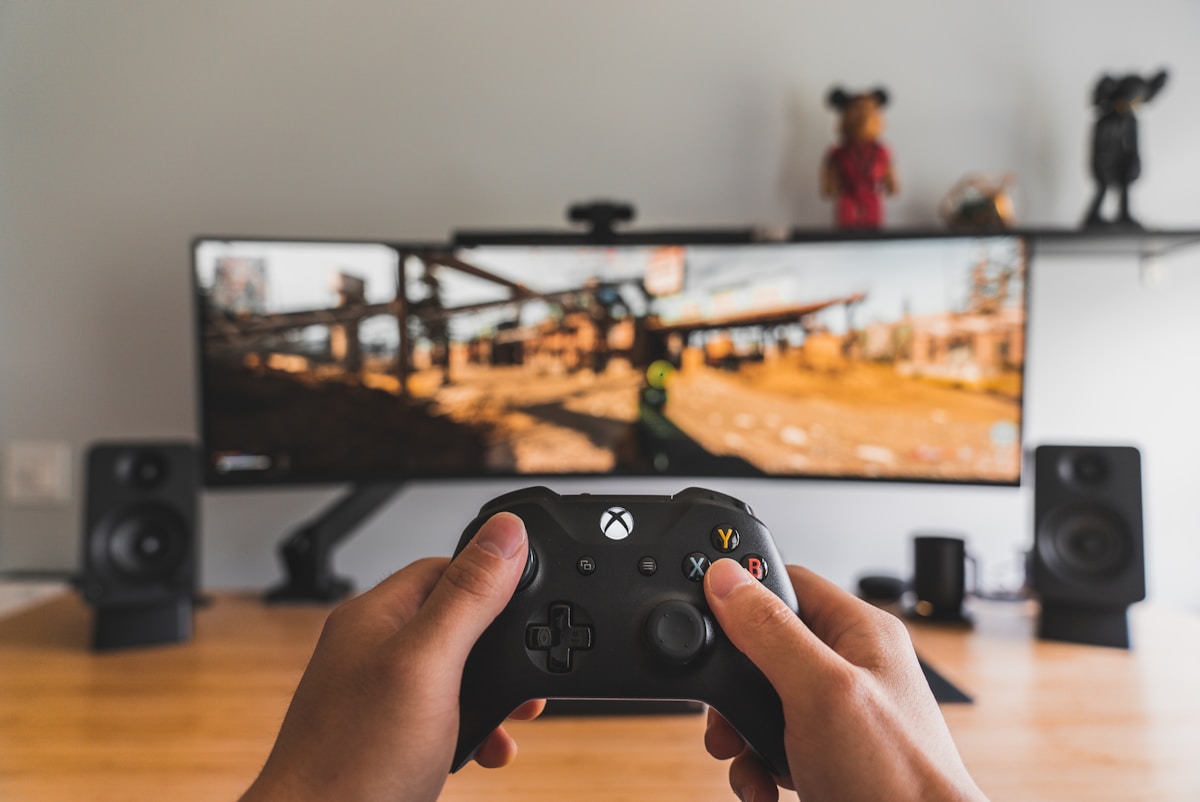
Portable gaming handhelds have gone from a niche to the most interesting part of gaming hardware in 2026. You can now play full PC games on a train, in bed, or on a plane, and the choice is no longer just one device. The Steam Deck, the ROG Ally, the Nintendo Switch 2, and a wave of new Windows handhelds all compete for the same bag space, and the right choice depends entirely on what you play and where you play it.
The Steam Deck remains the best value for PC gamers. It runs your Steam library, it is comfortable to hold for long sessions, and its price is lower than most competitors. Its weakness is raw power: demanding new games need lowered settings, and its battery lasts around two hours on heavy titles. If your library is mostly Steam and you value simplicity, the Deck is still the default choice.
The ROG Ally X and its Windows rivals offer more power and a bigger library, because Windows runs Steam, Epic, Xbox Game Pass, and everything else. The trade-off is Windows itself, which is clumsy on a small touchscreen, and battery life that is often worse than the Deck. The Nintendo Switch 2 is a different proposition entirely: less powerful, but with Nintendo exclusives you cannot play anywhere else and a battery that handles a long flight.
Battery life is the spec that matters most in daily use, and it is the one manufacturers exaggerate most. Real-world testing shows most handhelds last 90 minutes to two hours on demanding games and four to six hours on lighter ones. If you mostly play plugged in at home, battery does not matter. If you commute or fly, it matters more than raw power, and you should choose the device with the best battery for the games you actually play.
Screen quality is the second priority. An OLED screen makes colours pop and blacks look deep, which matters for atmospheric games, while a larger LCD screen is better for strategy games and text. Comfort is personal: hold the device if you can before buying, because weight distribution matters more than total weight. A well-balanced 650-gram handheld feels lighter than a poorly balanced 550-gram one.
Buy the Steam Deck if you want the simplest, cheapest way into PC handheld gaming and your library is on Steam. Buy a Windows handheld like the ROG Ally X if you want the most power and the widest library, and you do not mind dealing with Windows on a small screen. Buy the Switch 2 if you want Nintendo games, the best battery life, and a device your whole family can use.
Before you buy, check whether your favourite games are verified for the device. A game that runs badly on a handheld is worse than not playing it at all, and compatibility lists change with updates. The best handheld in 2026 is not the most powerful one. It is the one that plays your games, fits your hands, and lasts through your commute.
Accessories can change the experience as much as the device itself. A good carrying case protects your investment, a screen protector prevents the scratch that ruins every session, and a small USB-C power bank extends your playtime on long trips far more cheaply than buying the model with the bigger battery. A compact dock also turns a handheld into a TV console in seconds, which makes it the most flexible gaming device you own. Budget about ten percent of the handheld's price for accessories, and buy them before your first trip, not after your first scratch.
The handheld market in 2026 finally has a good option for every kind of player. Match the device to your library and your life, not to the spec sheet, and you will end up with a handheld you actually use every day.
📖 Continue Reading the Full Story
Continue reading this article on GameVault 668.
⚡ Access Full Content NowMore from GameVault 668

 🎰 WinBar VIP
Beginner to Advanced: GST Calculator — Add or Extract GST & VAT (Day 5 Guide)
How to maximize results using the GST Calculator — Add or Extract GST & VAT on WinBar VIP. Discover essential ...
 🤖 FreeRich AI Hub
Free Time Tracking Tools for Freelancers: 6 Options Compared for 2026
You cannot bill what you cannot measure. Six genuinely free time trackers compared on limits, invoicing, and w...
 💎 Try2Rich
2026 Industry Analysis: Freelancer Net Pay Calculator (PKR) — Upwork, Fiverr & Payoneer Fees (Day 3 Guide)
Why experts rely on Freelancer Net Pay Calculator (PKR) — Upwork, Fiverr & Payoneer Fees on Try2Rich. Discover...
 🎁 Get Rich Free
Free AI Tools That Help Beginners Start Freelancing in 2026
Free AI tools have lowered the barrier to freelancing to zero. Here are the best free AI tools for writing, de...